
Knee Arthroscopy
Minimally invasive surgical approach for diagnosing and treating knee conditions
What is Knee Arthroscopy?
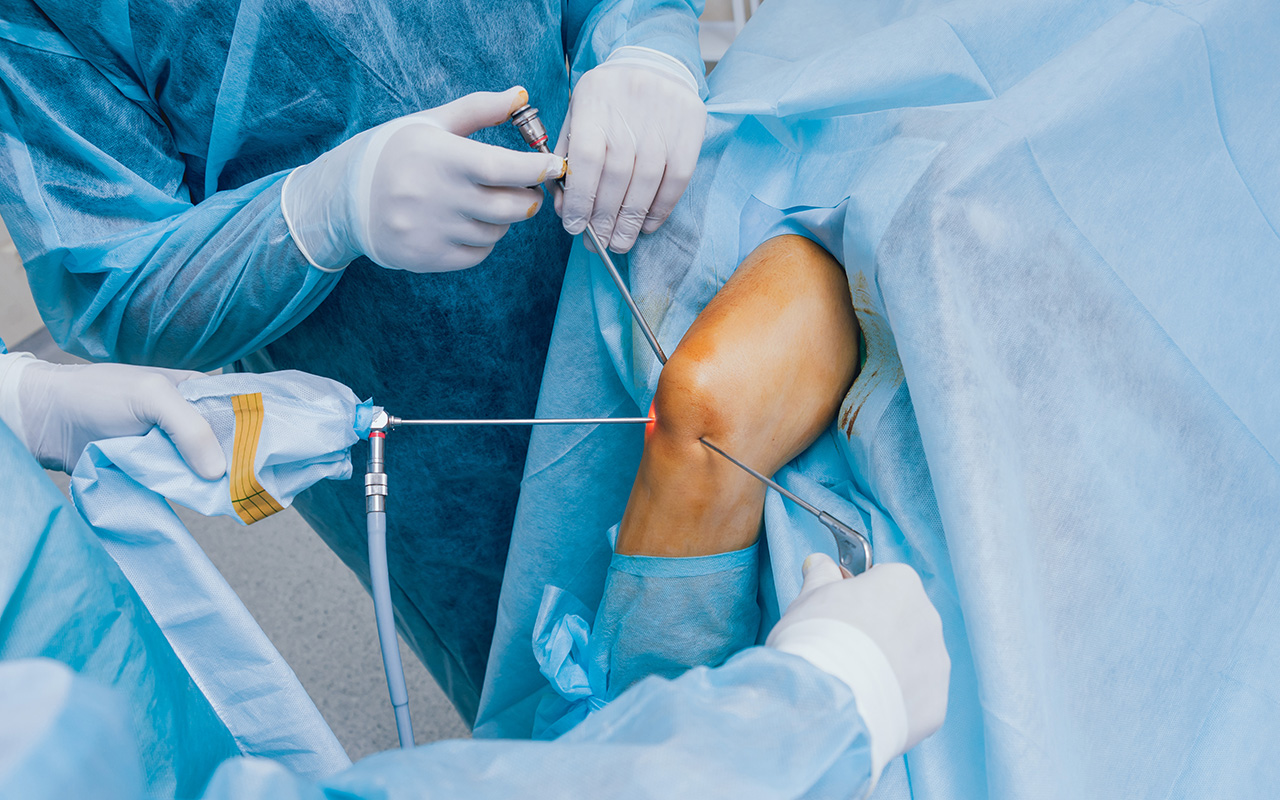
Knee arthroscopy is a minimally invasive surgical procedure that allows orthopedic surgeons to visualize, diagnose, and treat problems inside the knee joint. During a knee arthroscopy, Dr. Mahomed makes small incisions (usually 0.5-1 cm) and inserts a pencil-sized instrument called an arthroscope that contains a small lens and lighting system to magnify and illuminate the structures inside the joint.
The arthroscope is attached to a miniature camera that displays the inside of the knee on a high-definition monitor, allowing Dr. Mahomed to examine the knee joint in great detail. Through additional small incisions, specialized surgical instruments can be inserted to repair or remove damaged tissue.
When is Knee Arthroscopy Recommended?
Knee arthroscopy may be recommended for both diagnostic and treatment purposes when less invasive approaches (such as physical therapy, medications, or injections) have not provided relief. Dr. Mahomed may recommend knee arthroscopy to:
Diagnose Knee Problems
When MRI or other imaging studies are inconclusive, arthroscopy allows direct visualization of the knee structures to determine the source of pain, swelling, or instability.
Meniscus Tears
To repair or trim damaged cartilage (meniscus) that cushions and stabilizes the knee joint. Meniscus tears are among the most common reasons for knee arthroscopy.
ACL Reconstruction
To reconstruct torn anterior cruciate ligament (ACL), one of the main stabilizing ligaments of the knee commonly injured during sports or high-impact activities.
Cartilage Damage
To treat damaged articular cartilage through techniques such as debridement (removal of loose cartilage fragments) or microfracture (creating small holes in the bone to stimulate new cartilage growth).
Synovium Inflammation
To remove inflamed synovial tissue (the tissue lining the joint) in conditions like synovitis or rheumatoid arthritis.
Loose Bodies
To remove loose fragments of bone or cartilage that may be causing pain, catching, or locking sensations in the knee.
Common Procedures Performed During Knee Arthroscopy
Dr. Mahomed performs a variety of procedures during knee arthroscopy, depending on the specific condition being treated:
Meniscectomy
Removal of all or part of a torn meniscus when repair is not possible. The damaged portion is trimmed to create a smooth edge while preserving as much healthy meniscus as possible.
Meniscus Repair
Repairing a torn meniscus by suturing the torn pieces together. This is generally preferred when possible because it preserves the meniscus, which helps protect the articular cartilage from wear and tear.
Chondroplasty
Smoothing or trimming damaged articular cartilage to reduce friction and catching. This can help relieve pain and improve knee function.
Microfracture
A technique to stimulate the growth of new cartilage by creating small holes in the bone beneath the damaged cartilage. This allows bone marrow cells to access the area and form new cartilage-like tissue.
Synovectomy
Removal of inflamed synovial tissue, which may be causing pain and swelling within the joint.
Ligament Reconstruction
Repair or reconstruction of torn ligaments, such as the anterior cruciate ligament (ACL) or posterior cruciate ligament (PCL), using grafts from the patient's own body (autograft) or from a donor (allograft).
The Procedure
Knee arthroscopy is typically performed as an outpatient procedure, meaning you can go home the same day. The procedure is usually completed in less than an hour, though more complex cases may take longer.
The procedure is performed under anesthesia, which may be:
- Local anesthesia: Numbing the knee area only
- Regional anesthesia: Numbing from the waist down (spinal or epidural)
- General anesthesia: Being completely asleep during the procedure
During the procedure:
- Small incisions (portals) are made around the knee
- Sterile fluid is pumped into the knee to expand the joint and provide a clear view
- The arthroscope is inserted through one incision
- Additional instruments are inserted through other incisions as needed
- After the procedure is completed, the fluid is drained from the knee
- The small incisions are closed with stitches or steri-strips
- A dressing is applied to the knee
Recovery and Rehabilitation
One of the main advantages of knee arthroscopy is the relatively quick recovery time compared to open surgery. However, recovery varies depending on the specific procedure performed and individual factors.
Immediate Recovery (1-2 days)
You'll recover from anesthesia and learn to manage pain and swelling. Ice, elevation, and prescribed pain medications will help. You may be given crutches or a knee brace, depending on your procedure. Most patients go home the same day.
Early Recovery (1-2 weeks)
Pain and swelling typically improve significantly. You'll begin rehabilitation exercises as directed by Dr. Mahomed and your physical therapist. Depending on your procedure, you may begin weaning off crutches. Most people can return to desk work within a few days to a week.
Intermediate Recovery (2-6 weeks)
Physical therapy progresses to strengthen the knee and restore full range of motion. Most patients can resume normal activities and light exercise. The timeline varies based on the specific procedure - meniscus trimming typically allows faster return to activities than repairs or ligament reconstructions.
Long-term Recovery (6 weeks+)
Full recovery times vary greatly based on the procedure. Simple procedures may allow return to sports in 4-6 weeks, while ligament reconstructions may require 6-12 months of rehabilitation before full return to sports is advised.
Physical therapy is an essential component of recovery after knee arthroscopy. Dr. Mahomed will work closely with physical therapists to design a rehabilitation program tailored to your specific procedure and needs.
Advantages of Knee Arthroscopy
Compared to traditional open surgery, knee arthroscopy offers several advantages:
- Smaller incisions: Resulting in less pain and scarring
- Less tissue damage: Surrounding muscles and tissues are less disturbed
- Reduced risk of infection: Due to smaller incisions and less exposure
- Outpatient procedure: Most patients go home the same day
- Faster recovery: Many patients can return to normal activities within weeks
- Better visualization: The camera provides a magnified view of the knee structures
- Precise treatment: Allows for targeted treatment of specific areas with minimal disruption
Potential Risks and Complications
While knee arthroscopy is generally safe, like all surgical procedures, it carries some risks. These may include:
- Infection at the incision sites
- Bleeding within the knee joint
- Blood clots in the leg veins
- Damage to nerves or blood vessels
- Continued pain or stiffness
- Allergic reactions to anesthesia or medications
- Need for additional or more extensive surgery
Dr. Mahomed and his team take numerous precautions to minimize these risks, including careful patient selection, proper surgical technique, and appropriate post-operative care.
Frequently Asked Questions
Is knee arthroscopy painful?
During the procedure, you'll be under anesthesia and won't feel pain. After surgery, most patients experience some discomfort, but it's typically less than with open surgery and well-controlled with prescribed pain medications. Ice, elevation, and following your doctor's instructions help manage pain effectively. Most patients report that pain diminishes significantly within a few days.
How long will I need to use crutches after knee arthroscopy?
The need for crutches varies based on the specific procedure performed. For simple procedures like meniscus trimming or diagnostic arthroscopy, many patients can bear weight as tolerated immediately or within a few days. More complex procedures like meniscus repair or ligament reconstruction may require crutches for 4-6 weeks. Dr. Mahomed will provide specific weight-bearing instructions based on your individual case.
When can I drive after knee arthroscopy?
You should not drive while taking narcotic pain medications or if you have significant limitations in knee motion. Most patients can resume driving when they no longer require pain medications that impair judgment, have adequate control of their operative leg, and can safely operate the brake and accelerator. For surgery on the right knee, this is typically 1-2 weeks; for the left knee (assuming automatic transmission), it may be sooner if not taking narcotics.
When can I return to sports after knee arthroscopy?
Return to sports varies greatly depending on the procedure performed and your individual healing process. For simple procedures such as diagnostic arthroscopy or meniscus trimming, some patients may return to low-impact activities within 4-6 weeks. More complex procedures like meniscus repair may require 3-4 months, while ACL reconstruction typically requires 6-9 months before return to pivoting sports. Dr. Mahomed will provide specific guidance based on your procedure and progress.
Will knee arthroscopy prevent or delay the need for knee replacement?
For patients with early to moderate arthritis who also have specific treatable conditions (like meniscus tears or loose bodies), arthroscopy may provide temporary relief and potentially delay the need for knee replacement. However, arthroscopy is not generally recommended as a treatment for osteoarthritis alone. For advanced arthritis, knee replacement is typically the more appropriate treatment. Dr. Mahomed will discuss the most appropriate options based on your specific condition.
Ready to Discuss Your Knee Treatment Options?
If you're experiencing knee pain, locking, catching, or instability, Dr. Nabeel Mahomed and his team are here to help. Schedule a consultation to discuss your symptoms, evaluate your condition, and develop a personalized treatment plan.
Book Your Consultation Today